 A couple of weeks ago, Mark was traveling, so I cooked dinners for myself.
Because of my vertigo, I plan what to cook and when. One of my favorite dinners is baked-and-then-broiled salmon with roasted veggies. Since we roast the veggies with garlic and olive oil, we need to stir the veggies partway through the cooking. Enter the wooden spoons, pictured in the image with this post.
However, only one of the spoons was long enough for me to use safely when I lean forward to stir the veggies. (No, I do not want to fall into an open oven!) In addition, I can’t put the wooden spoons into the dishwasher. I need to wash them by hand.
As we say in our family, those spoons owe me nothing. I probably bought those spoons in 1977, when I got my first apartment. Those spoons more than paid for themselves over time. Now, those spoons might only useful for someone else.
Instead, I got the silicone spoons on the left of the image. That means every handle is long enough, so I’m in no danger of falling forward into the oven. As another benefit, everything goes into the dishwasher.
Score!
We don’t always realize when it’s time to retire and replace old tools—even wooden spoons. When do our tools outlive their usefulness?
Notice When Tools Outlive Their Usefulness
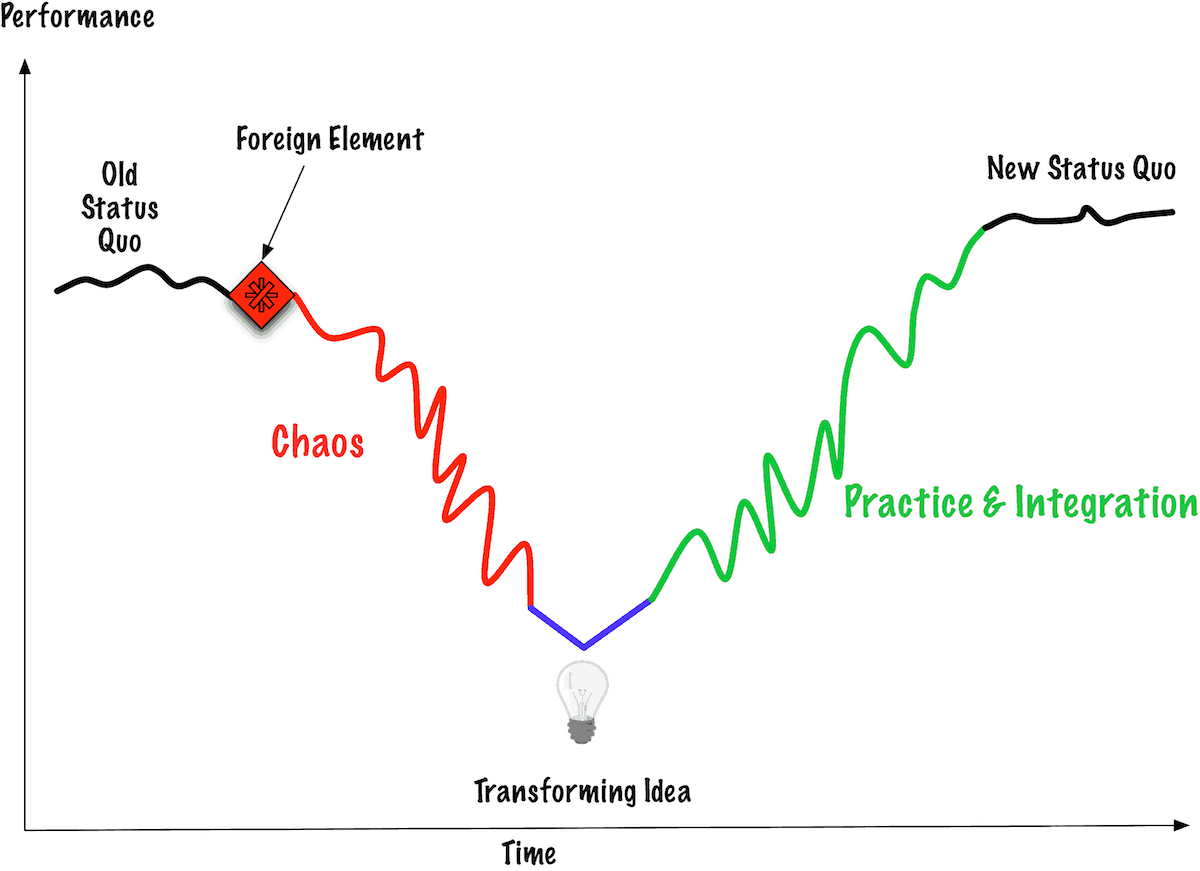 Many of us don’t always notice when tools outlive their usefulness. For example, notice the burn marks on the old spoons. Were the burn marks an indication that maybe I used the spoons for too long—years ago? Probably. But when we’re comfortable in Old Status Quo, many of us want to maintain that Old Status Quo. (See Where Are You In Your Changes? for more details about the Satir Change Model.)
Kitchen tools might be the tools we use a lot that we might need to change more often than we think. But our technological tools—we often need to reconsider them more often.
I used the same computer from 2013-2020. That MacBook Pro worked like a champ in 2013. But even in 2017, I started whining about it. And by 2019, it was limping along. Under the guise of frugality, I made my life more difficult, because I had not yet bought a new computer.
That was an example of twisting and turning myself to remain in Old Status Quo. Why? Because I thought the cost of moving my data from the old to the new machine might be “too long” to manage. (It wasn’t. In the intervening 7 years, Apple had figured out how to make moving data much less painful.)
Even though I knew I needed a new computer, I just could not bear the thought of “wasting” an entire day migrating my data. But the reality? I was already wasting hours every day, limping along with an inadequate machine.
(My clients do this too, because we are altogether too human. There’s a name for this: Cost of Delay. See Cost Of Delay: Why You Should Care, Part 6 for much more detail about some of the costs of delay.)
When I start whining about problems, such as leaning too far over to stir veggies, or my computer is too slow, that’s an indication my tools are not working. It’s time for me to consider whether to retire or replace my old tools.
That’s the question this week: How can you decide it’s time to retire & replace old tools, such as spoons?
Great piece. Note that I regularly put bamboo utensils in the dishwasher and they don’t seem to be harmed like regular wooden spoons–or wooden cutting boards, which someone here put in the dishwasher with a bad outcome!
Mike, thanks. I had not thought of bamboo!! So far, I’m really happy with the silicone.